
Balloon Backdrop Ideas for Photo-Worthy Events
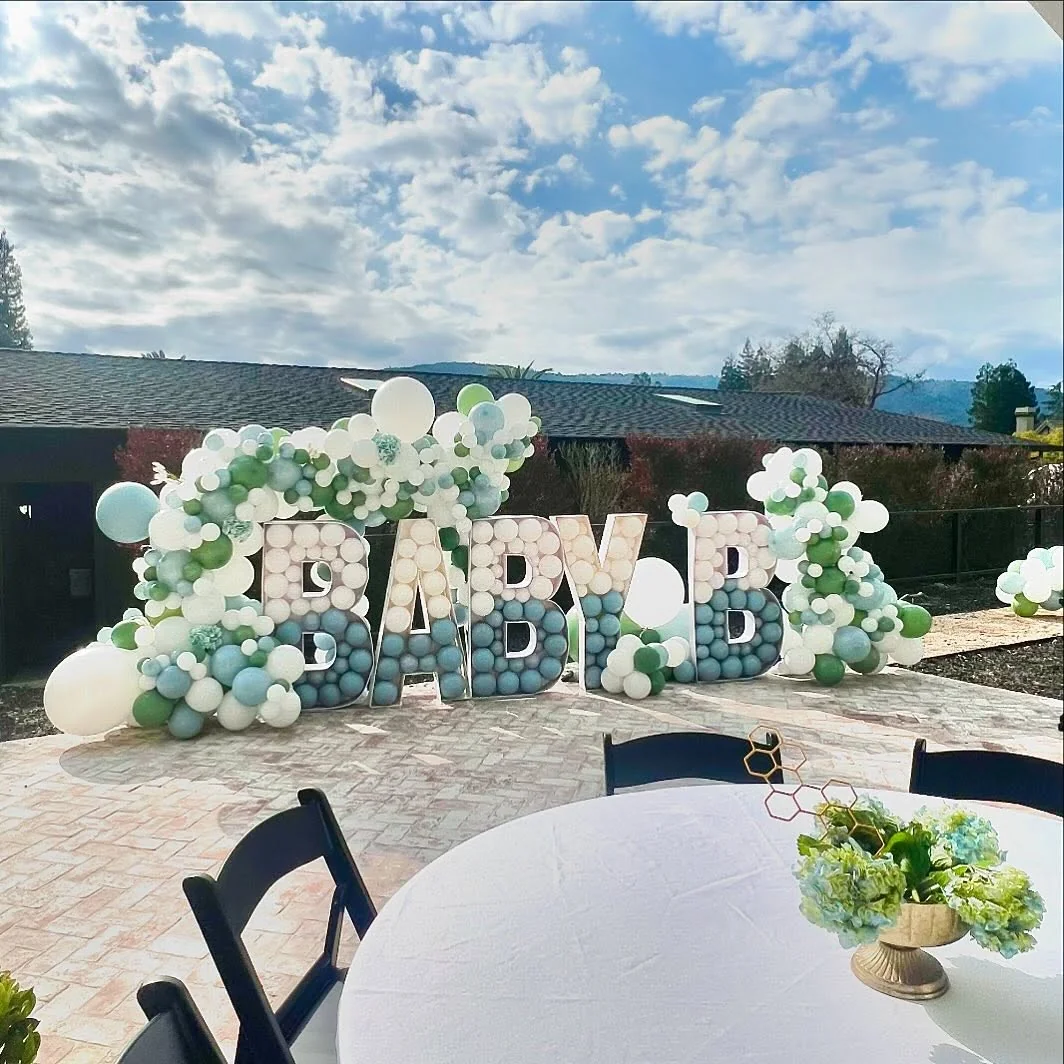
A few years ago, a dedicated photo backdrop was something you saw at a wedding or a brand launch. Now guests expect one at a first birthday, a baby shower or an office party, because the photos taken in front of it are the ones everyone shares afterward. Balloons are one of the most versatile and affordable ways to build that spot: they come in any color and scale from a small garland to a full wall.
These balloon backdrop ideas come from backdrops we set up in homes, restaurants and venues across the Bay Area. For what we install, see balloon backdrops, or our local pages for San Jose and San Francisco.
Why a Balloon Backdrop Works for Any Event
A backdrop gives the room a focal point. Without one, guests take photos wherever the light happens to be decent, and the background is a door, a buffet line or an exit sign. With one, there is an obvious place to stand, and every photo from the event shares the same frame and palette.
It also anchors the rest of the decor. Put the backdrop behind the cake table, the gift table or the head table, repeat its colors in the centerpieces and signage, and the room looks designed rather than assembled.
A balloon photo booth backdrop has one more advantage over fabric or printed ones: depth. Balloons stand several inches to a foot off the panel, catching light and shadow, so the background looks three-dimensional even on a phone camera.
Popular Backdrop Styles
Most backdrops we build are one of five styles, and each produces a different kind of photo.
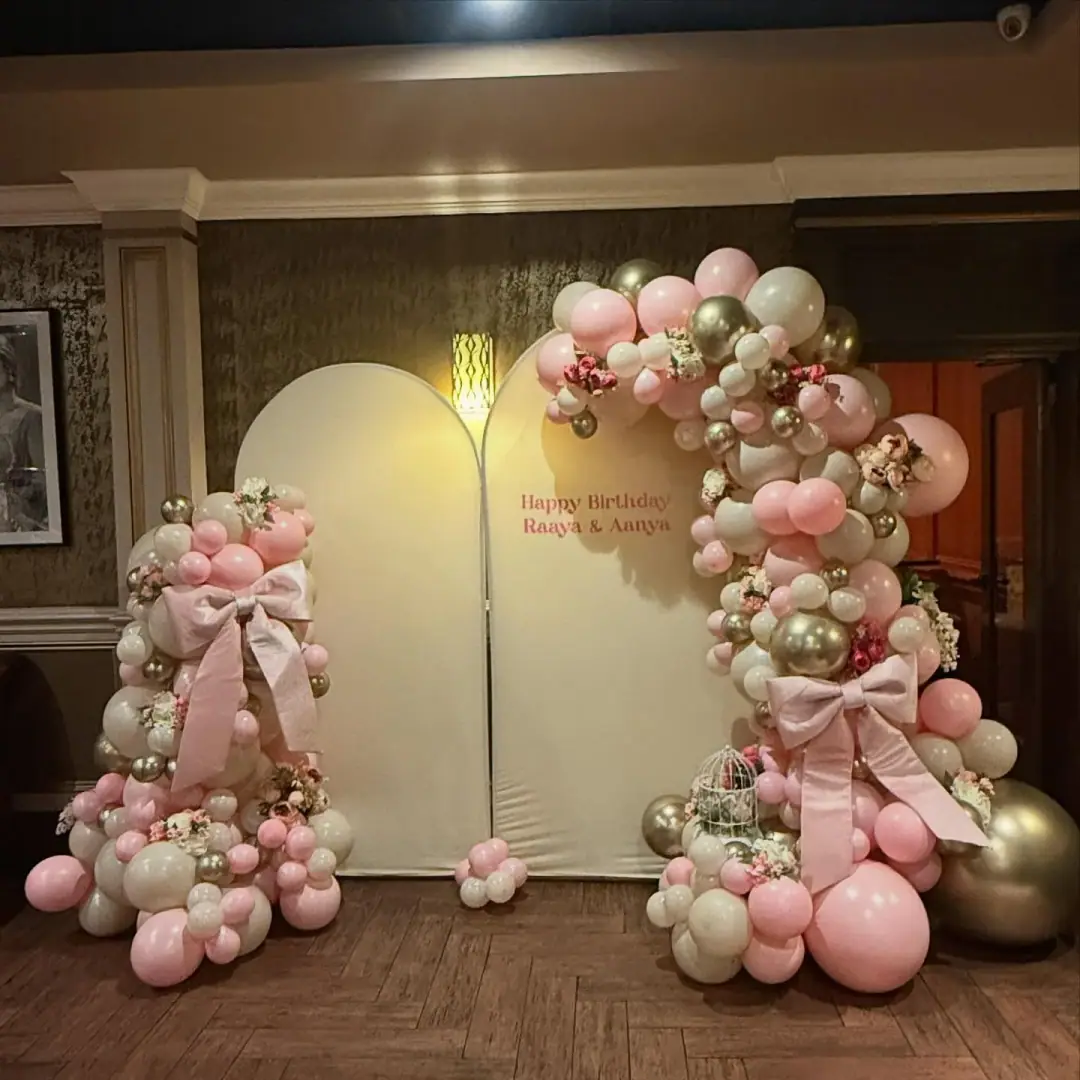
Organic Garland Backdrop — A balloon garland in mixed sizes runs over the top and down one side of a panel or frame, leaving the middle open for a sign, the cake table or the guests. An organic balloon backdrop is the most flexible style: it suits almost any theme and can be built to any width, which is why we recommend it when a client is unsure.
Full Balloon Wall — Balloons packed edge to edge until the frame disappears. A balloon wall backdrop makes the strongest statement and suits step-and-repeat photos and branded events, but it uses several times the balloons of a garland design. See balloon walls for the service and our balloon wall ideas for styles.
Ombre Gradient Backdrop — Color that shifts from light to dark across the design, such as white into blush into dusty rose. An ombre balloon backdrop works best with two or three shades of one color, with the lightest tone at face height.
Arch-Framed Backdrop — A balloon arch standing in front of a panel or a wall, so guests stand inside a frame. A balloon arch backdrop adds depth and doubles as an entrance, which suits large rooms and outdoor ceremonies where a flat panel would look small.
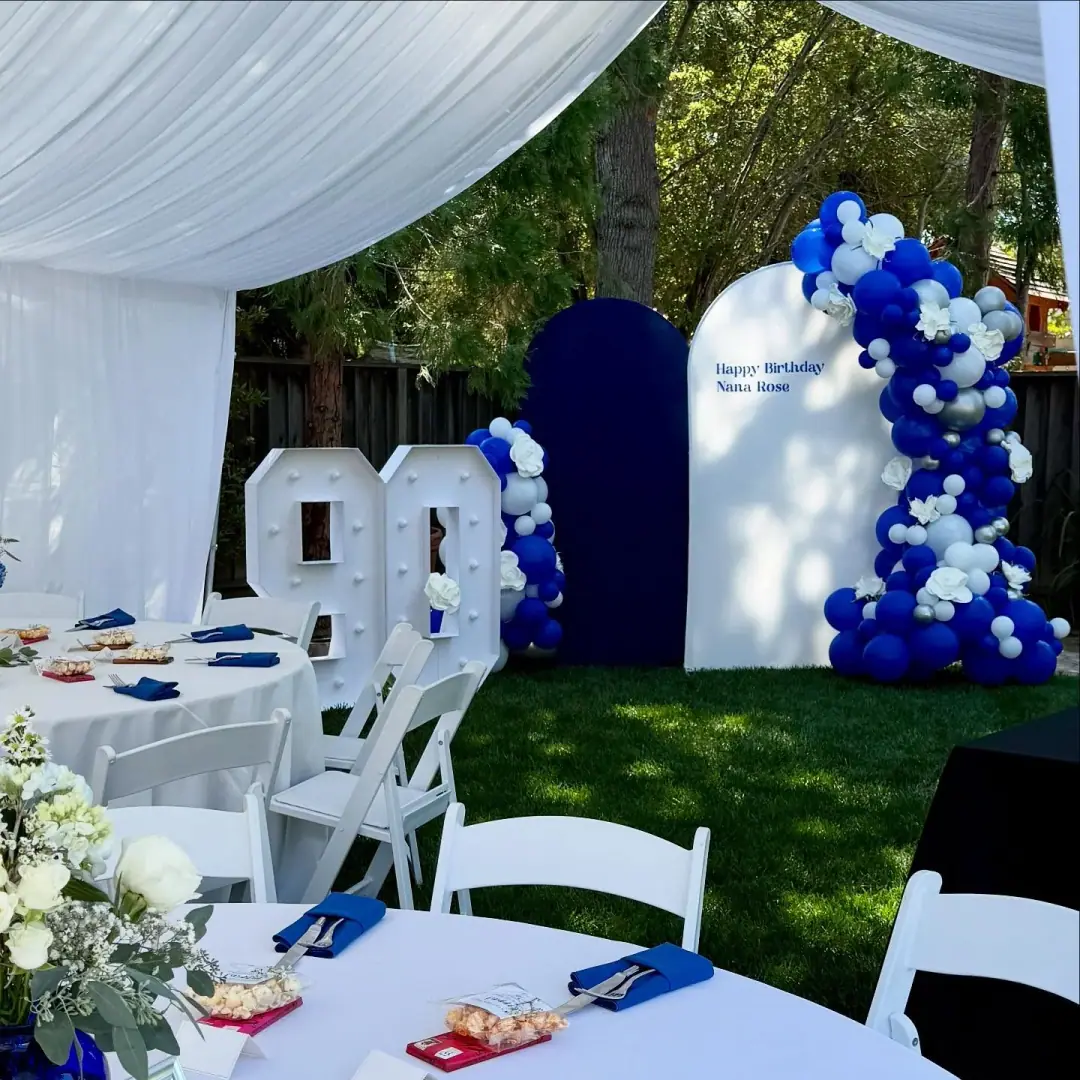
Mosaic Pattern Backdrop — Balloons set into a grid to form a number, initials or a pattern, with high contrast so it reads in photos. It suits milestone birthdays and brand events, where the design needs to say something specific.
Backdrop Ideas by Event Type
Birthday party — A balloon backdrop for birthday parties usually carries the guest of honor's name or age: a foil number, a printed panel or a light-up marquee number in front. Kids' parties take bright colors and a theme; adult birthdays look better in a restrained palette. Place it behind the cake table so the candle photo includes it.
Wedding or bridal shower — A balloon backdrop for wedding events leans toward ivory, white, blush and greenery, often mixed with fresh or silk flowers and a neon phrase. At a reception, set it behind the sweetheart table; at a bridal shower, behind the dessert table, where most of the photos happen.
Baby shower — Soft pastels or sage and cream, arched panels with the baby's name or “Oh Baby,” and balloon blocks or a teddy bear on the floor. A garland backdrop 6 to 8 feet wide covers the photos without crowding a living room.
Corporate event — Brand colors matched from hex values, with the logo on a printed panel framed by balloons or built as a mosaic for simple marks. Put it at registration or beside the stage. For store and office launches, see grand opening balloon decorations.
Choosing Colors and Textures
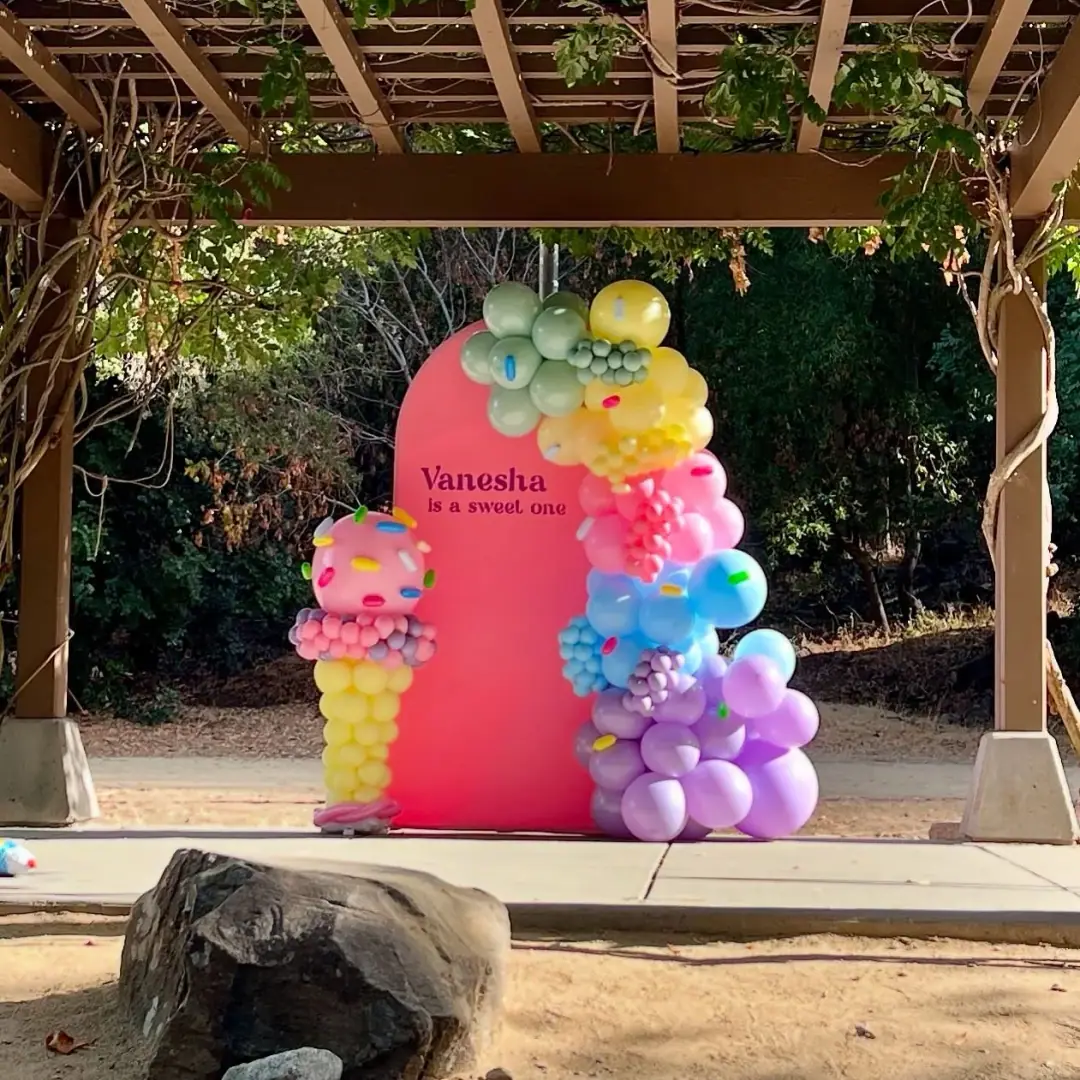
Finish matters as much as color. Matte latex looks soft and modern and photographs without glare. Metallic and chrome balloons add shine, but in direct sun or under a camera flash they can show up as white hot spots, so they work best as accents. Pearl sits in between, with a gentle sheen that reads as elegant in daylight and indoor light alike. Mostly matte with one metallic accent is the mix that photographs most reliably.
Palette sets the mood. Bright primaries and rainbow mixes feel playful and suit kids' parties. Pastels feel gentle, ivory and champagne with gold feel formal, and black with gold and chrome reads as glamorous. Two or three colors are enough; more than that and the backdrop competes with the people standing in front of it.
Consider the room light too. The warm lighting in most banquet halls shifts pale blue and lilac toward gray by evening, so choose slightly stronger shades for indoor evening events.

Sizing and Placement Tips
Typical dimensions — Most photo backdrops are 6 to 8 feet wide, roughly what a phone camera frames with three or four people standing in front. Height matters more than width: the design should reach 7 feet or more, so there is no band of bare wall above the tallest guest's head.
Floor space — Plan for the backdrop's own depth, about 2 to 3 feet for a garland design and more for an arch, plus around 6 feet of clear floor in front for whoever is taking the photo.
Placement — We build backdrops on a freestanding frame, so they can go where the photos are best rather than where a blank wall happens to be. Keep them clear of doors, exit signs and fire panels. Exit routes have to stay unobstructed, with nothing placed in them even temporarily (29 CFR 1910.37), so venue staff will ask you to move anything that blocks one.
Lighting — Never set a backdrop in front of a bright window, which turns everyone into a silhouette. Face it toward the main light source instead, and for evening events add a warm uplight or a neon sign so the photos do not depend on a flash.
Outdoors — Look for shade and weight the frame for wind, which picks up across much of the Bay Area in the afternoon.
Choosing Your Backdrop
Start with the photo: who will stand in front of the backdrop, what the camera needs to see, and where the light comes from. An organic garland suits almost any event, a full wall makes the biggest statement, an arch adds depth, and ombre or mosaic designs make it personal. Keep to two or three colors, build it at least 7 feet tall, and place it away from windows and exits.
Use these balloon backdrop ideas to narrow down a style, then browse our balloon backdrops for installed examples, check starting prices on the pricing page, and contact us with your venue and date for a custom design.
Need a photo-ready backdrop?
Balloon Bay designs custom balloon backdrops sized and styled for your event, from an intimate garland to a full statement wall.
Request your free quote today