
Balloon Wall Ideas: Creative Designs for Any Celebration
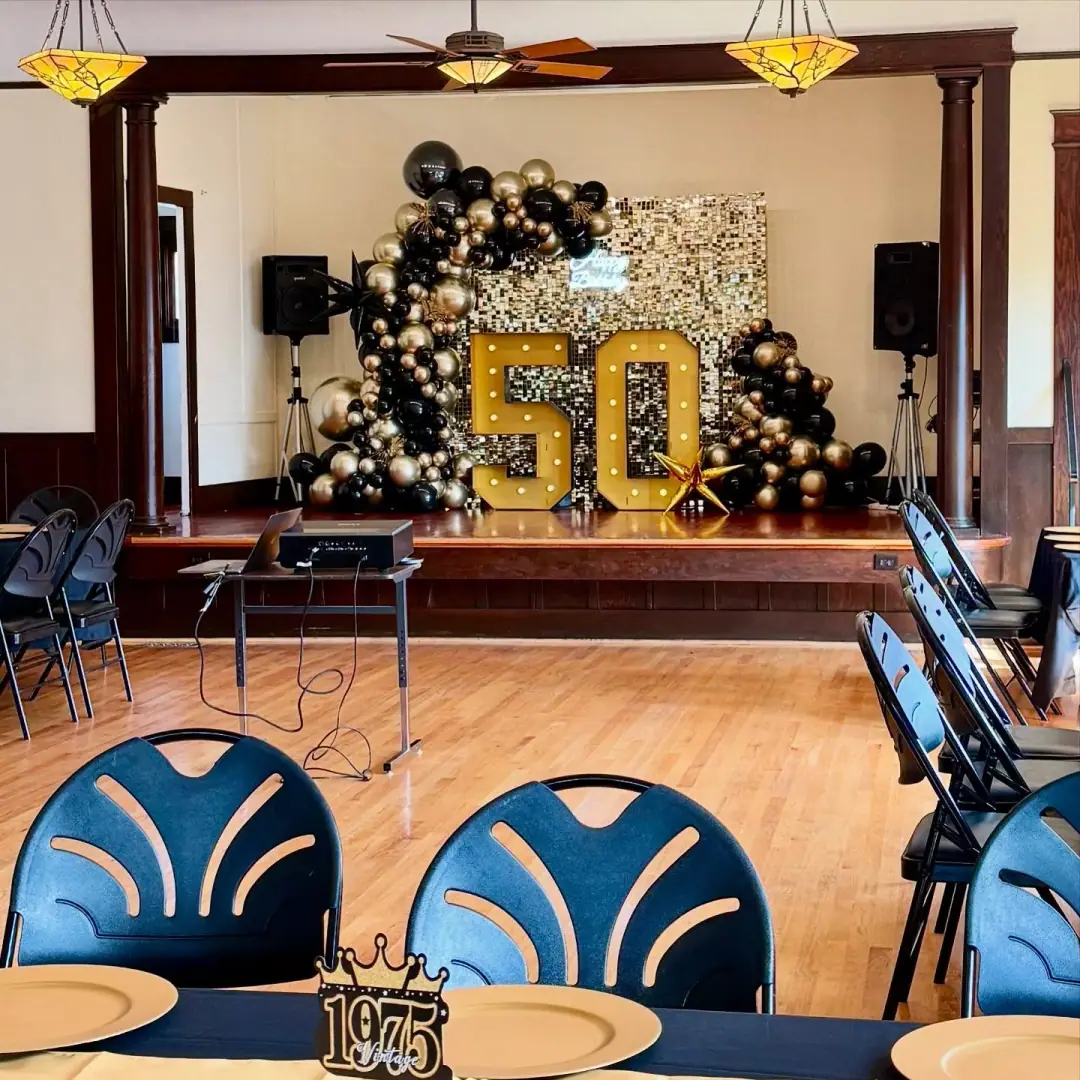
Balloon walls started as a party accent: a few clusters taped up behind a cake table. Today a wall is often the largest single piece of decor at an event, a dense surface of balloons built on its own frame and sized to fill a stage, an entrance or a photo area. These balloon wall ideas come from walls we have built for birthdays, weddings, showers and company events across the Bay Area, from ombre and mosaic designs to shaped and LED-lit walls.
For what we install, see balloon walls.
What Makes a Statement Balloon Wall
A simple backdrop is a panel with balloons around it: a garland over the top and down one side, with the panel showing in the middle. A full-coverage balloon wall hides its frame completely. Balloons cover every inch of the surface, so the camera sees one continuous field of color and texture.
Scale comes next. A wall reads as a statement when it is taller than the people standing in front of it and wide enough to frame a group, which in most rooms means about 8 feet in each direction. Much smaller, and it looks like a large backdrop rather than a wall.
Texture finishes the effect. A wall built from one balloon size in one finish looks flat in photos. Mixing 5-inch, 11-inch and 18-inch balloons, and matte with chrome or pearl, gives the surface depth and catches the light, which is where most balloon wall inspiration you see online gets its look.
If a lighter build covers what you need, balloon backdrops fill the same photo spot for less.
Popular Balloon Wall Styles
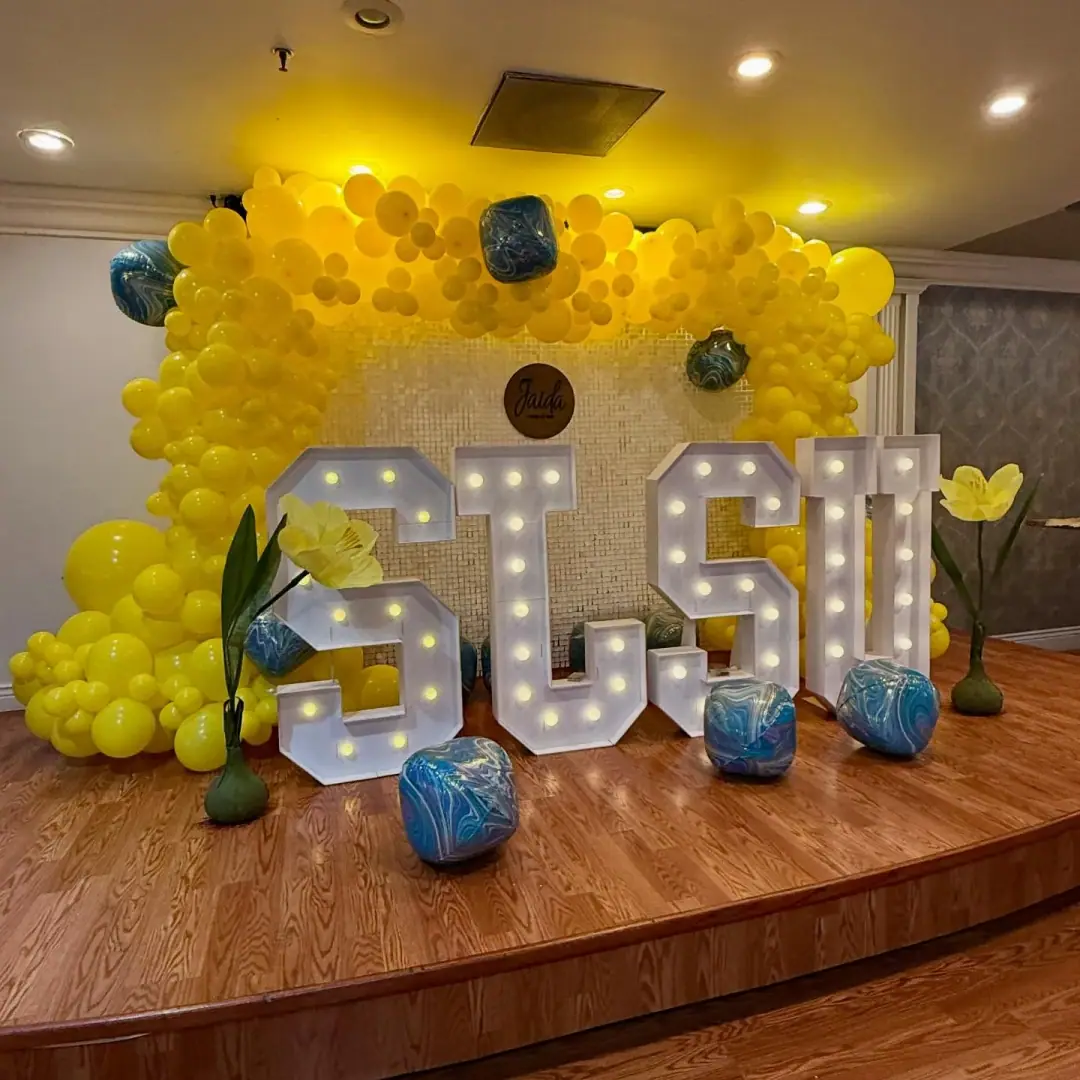
Most balloon wall design ideas fall into five styles, and each suits a different event and room.
Ombre Gradient Wall — One color fades into another from top to bottom or side to side, such as blush into rose into burgundy. Keep it to two or three related shades; beyond that, the gradient turns into stripes. An ombre balloon wall is one of the most flattering designs behind people, especially with the lightest tone at face height.
Mosaic Logo or Pattern Wall — Balloons set into a grid on a frame, with each color placed to form a number, a word, a checkerboard or a simple logo. A mosaic balloon wall works best with bold shapes and strong contrast: a two-digit number or a four-letter word reads clearly, while a detailed logo with thin lines does not. For complex marks, a printed logo panel mounted on a wall in the brand colors keeps the logo sharp.
Shaped Walls (hearts, stars, numbers) — Instead of a rectangle, the frame itself is cut as a heart, a star or a number, then filled with balloons. Shaped walls work as a photo spot on their own and suit weddings, engagements and milestone birthdays.
LED-Lit Balloon Wall — String lights woven through the balloons, clear balloons with LEDs inside, or a neon sign mounted on the surface. Lighting keeps a wall the focal point of an evening reception, when an unlit wall fades into a dim room. Plan for a power outlet nearby.
Textured Mixed-Finish Wall — One color family built from matte, chrome, pearl and satin balloons in several sizes. It looks rich without needing a pattern and is the easiest style to match to a formal event.
Balloon Wall Ideas by Event
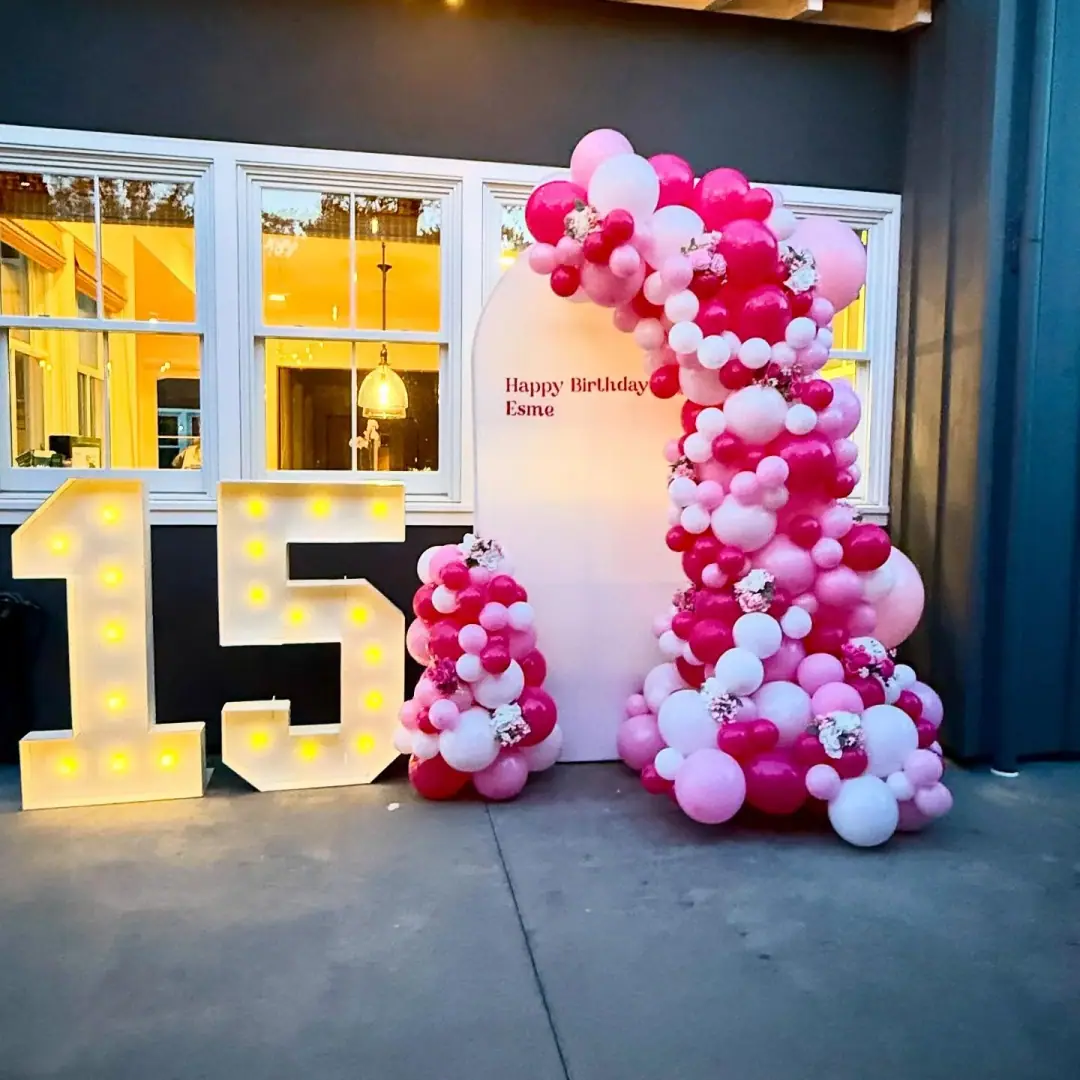
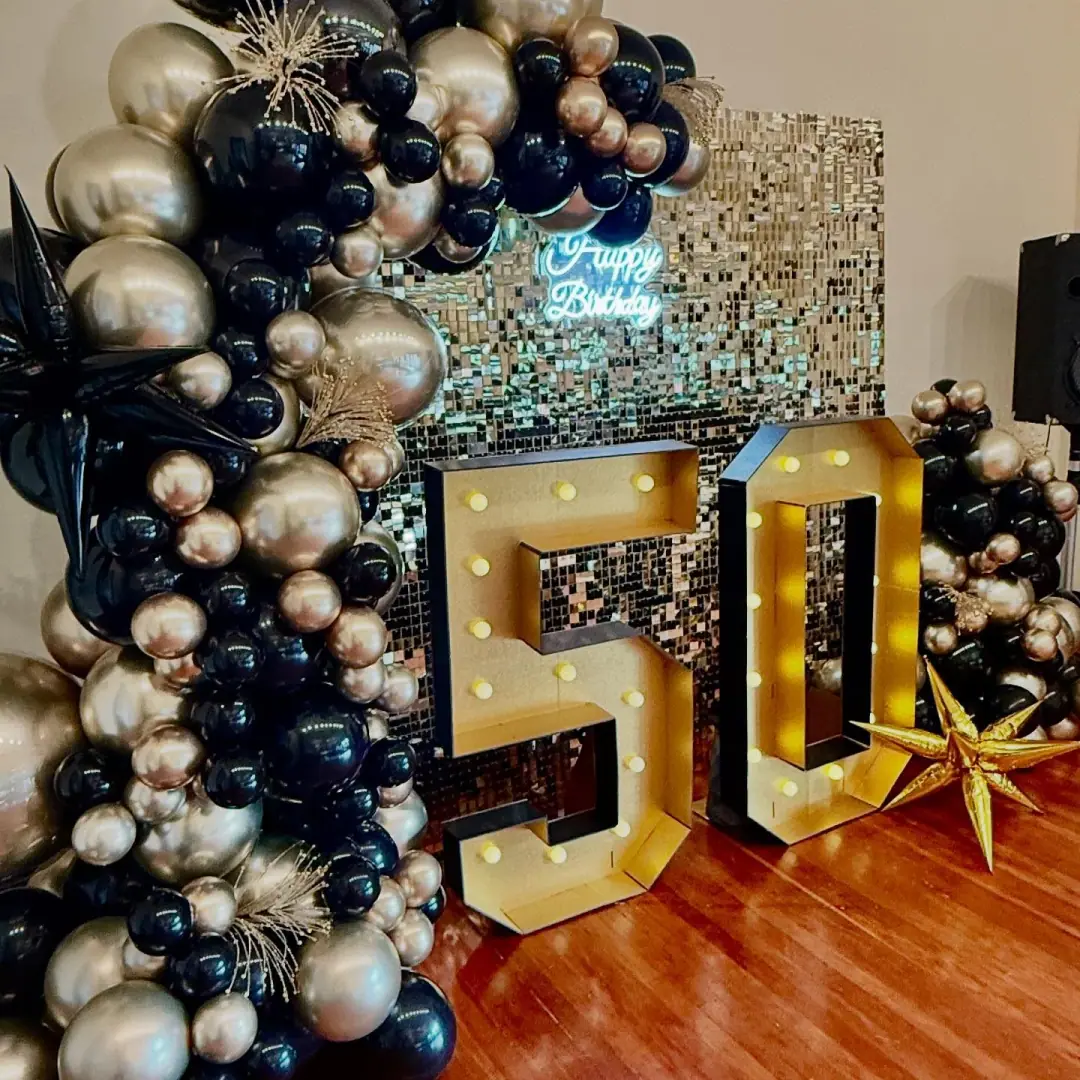
Milestone birthday — A balloon wall for birthday milestones usually centers on the age, with light-up marquee numbers in front of the wall or the number built into a mosaic. Black, gold and chrome suit a 40th or 50th; hot pink, blush and white suit a quinceañera or a sweet 16.
Wedding or bridal shower — A balloon wall for wedding receptions tends toward ivory, blush and champagne in mixed finishes, often with fresh or silk flowers and a neon phrase. A heart-shaped wall or a textured white wall behind the sweetheart table gives the couple a photo spot that also frames the head table all evening.
Corporate launch — Brand colors matched from hex values, with the logo as a mosaic for simple marks or a mounted printed panel for detailed ones. Place the wall at registration or beside the stage, where guests pause and take photos. See corporate balloon decorations.
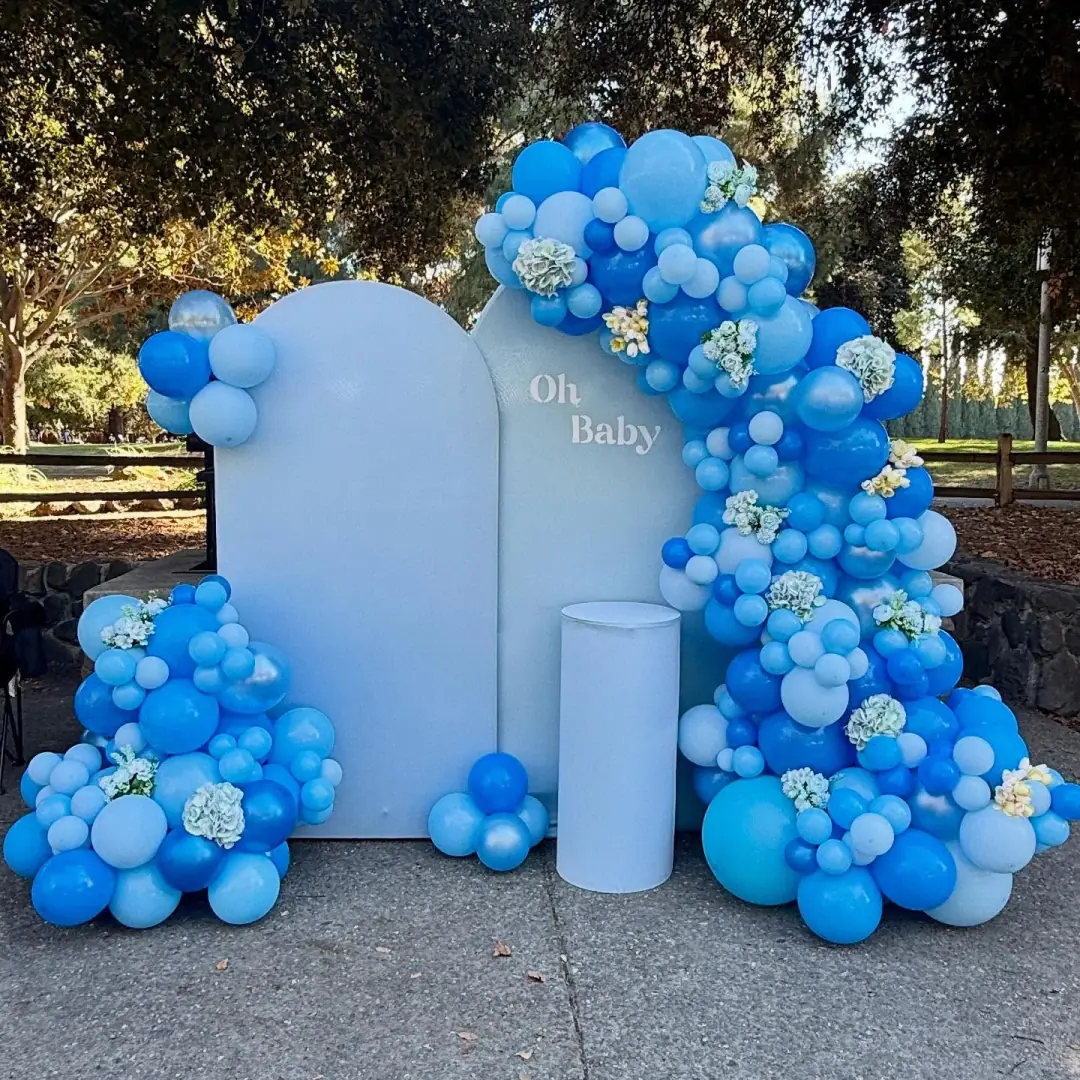
Baby shower — Soft pastels or a gradient from white into the chosen color, with the baby's name or an “Oh Baby” sign. A compact wall beside the gift table, where most photos are taken, is usually a better use of budget than decor spread across the room.
Sizing and Installation Considerations
Frame — Every full-coverage wall is built on a rigid frame, either a grid panel or a pipe-and-base stand, that holds the balloons and carries their weight. It stands on its own, so nothing is taped, nailed or hung from the venue's walls, which many banquet halls and hotels prohibit.
Wall dimensions — Photo walls are commonly 8 feet wide by 8 feet tall, enough to frame a group of four; stage and entrance walls are sized to the space. Measure the ceiling height and the doorways the finished sections must pass through.
Balloon density — As a rough guide, a full-coverage 8-by-8-foot wall uses 400 to 700 balloons, depending on the sizes and how tightly they are packed. A garland-framed panel of the same width uses a fraction of that.
Weight and wind — A finished wall carries real weight and surface area, so the base has to be ballasted for the room. Outdoors it catches wind like a sail and needs heavier weights or a sheltered spot. Under a tent, California requires decorative materials in fabric enclosures to be nonflammable or flame-retardant (Health and Safety Code 13115), so raise the wall with your tent vendor early.
Professional installation — Anything larger than about 6 by 6 feet takes a crew, several hours and a frame most people do not own. We build the balloon sections in advance, deliver them, install on site within the venue's access window and return for teardown.
Choosing the Right Wall for Your Event
The strongest balloon wall ideas start with the event and the room: an ombre or textured wall for an elegant evening, a mosaic or shaped wall when the design has to say a name, a number or a brand, and lighting whenever the event runs past sunset. Size the wall to frame the photos, and plan the frame and the access window early.
Still collecting statement balloon wall ideas? Browse balloon walls for examples, see balloon arches if you want a frame around the wall, and contact us with your venue, date and the designs you like.
Want a statement balloon wall?
Balloon Bay designs custom balloon walls — from ombre gradients to branded mosaic patterns — built to fit your space and event.
Request your free quote today