
Balloon Centerpiece Ideas That Work at Every Table
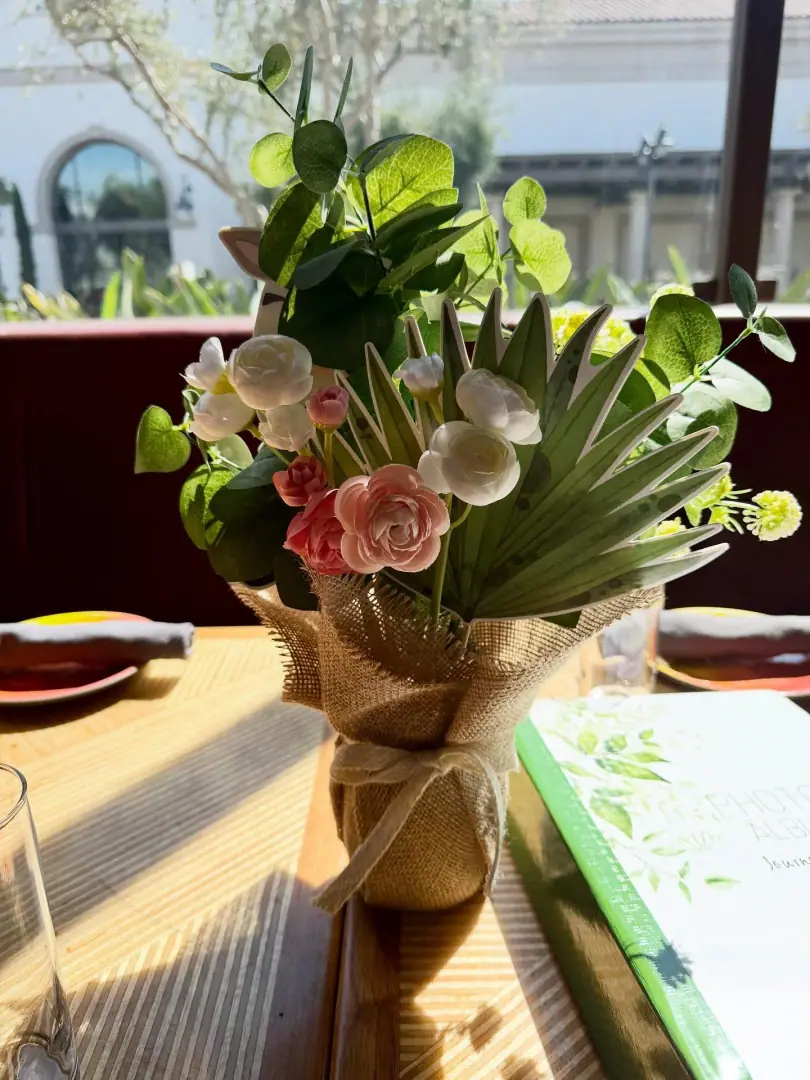
The best balloon centerpiece is the one your guests can see past. Unlike an arch or a backdrop, a centerpiece is not built to be photographed from across the room — it sits eighteen inches from someone's face for four hours while they try to hold a conversation. Height is the decision that matters, and everything else follows from it.
This guide covers how tall a centerpiece should actually be, the five styles that cover most events, how many you need for your table count, and what a set costs here in the Bay Area. If you already know what you want, see our balloon centerpieces or request a quote.
Height Decides Everything Else
There are only two workable heights, and the gap between them is the problem. A centerpiece either sits low enough to see over — roughly under twelve inches, the height of a florist's low arrangement — or tall enough to see under, on a slim stand that lifts the balloons above seated eye level with nothing but a pole in the sightline. Anything in between is the one thing to avoid: a cluster at seated eye height splits a table of ten into two conversations that cannot see each other.
Which way you go depends on the event, not on taste. A seated dinner where people talk across the table — an awards night, a rehearsal dinner, a company holiday party — wants low. A birthday or shower where guests circulate, graze and photograph wants tall, because height is what makes the room feel decorated from the doorway. When we build for a corporate dinner we keep centerpieces deliberately low so seated sightlines stay clear; see balloon decorations for corporate events.
Five Styles, and the Table Each One Suits
Most Bay Area events land on one of five builds. They are not interchangeable — each suits a particular table and a particular evening.
- Topiary cluster on a weighted base — a rounded cluster lifted on a slim stand. The tall option, and the workhorse for birthdays, showers and quinceañeras. Weighted so it survives a bumped table.
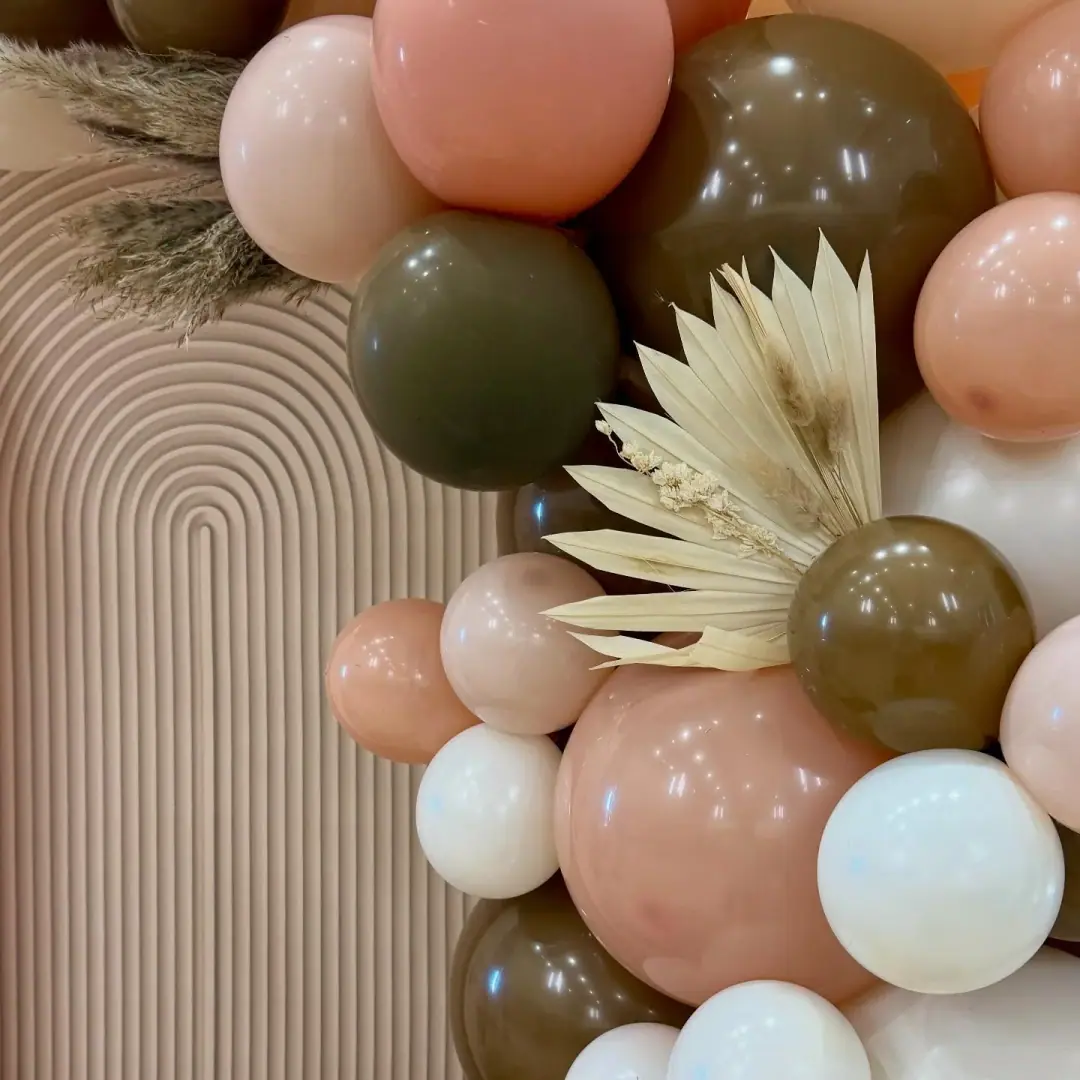
- Low organic accent — a wide, low cluster that hugs the tablecloth, often with a floral or greenery accent worked in. The right answer for any seated dinner, and the only one that genuinely disappears from the conversation.
- Foil-topped table topper — a latex base with a themed foil on top, a number, a character, a shape. Reads instantly at a kid's party and keeps the theme going from the entrance to every table.
- Number and milestone — the age or the year built into each centerpiece. Strong for a 40th, a 50th, a retirement or a graduation, where repeating the number across ten tables does more than one large display would.
- Corporate brand-color — matched to a company palette, kept low, with no character elements. Deliberately plain, because the point is that the room looks considered rather than decorated.
How Many You Actually Need
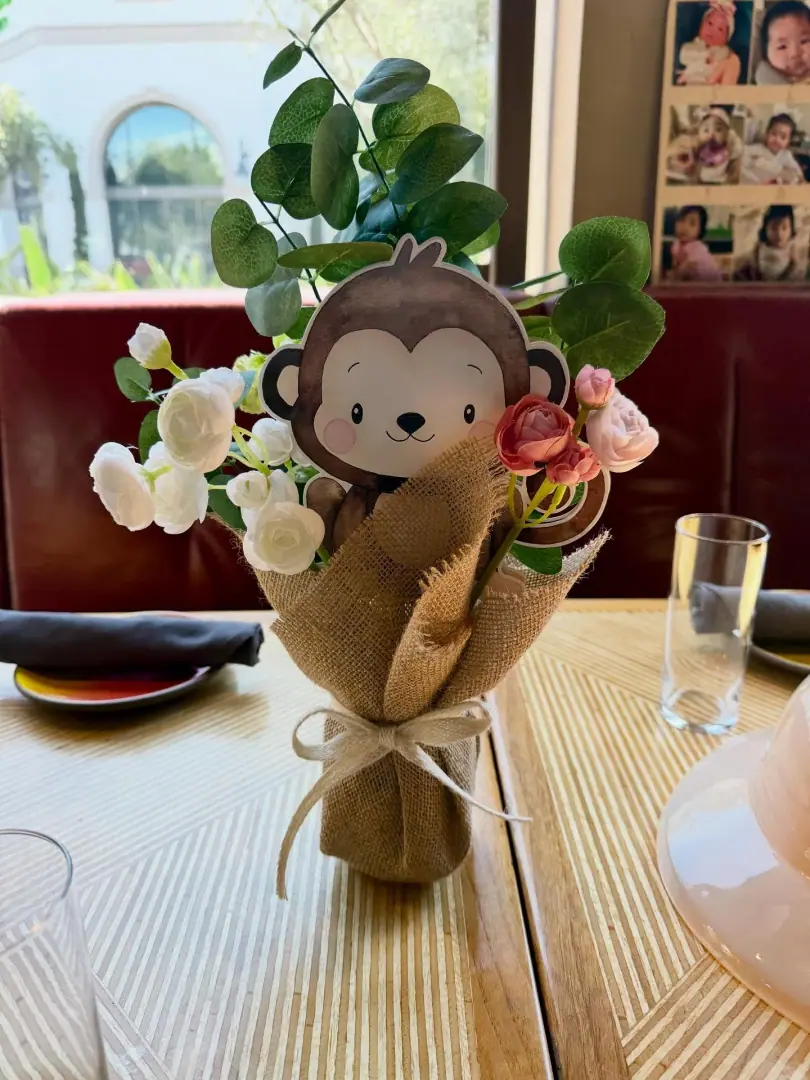
Count tables, not guests. A standard sixty-inch round in a Bay Area banquet hall seats eight to ten and takes exactly one centerpiece; trying to fit two crowds the plates and the shared dishes. Long banquet tables are the ones people get wrong — a sixteen-foot table wants two or three evenly spaced, not one marooned in the middle, and the spacing rule of thumb is one per six to eight feet.
Cocktail and highboy tables take a smaller version of the same design, and they are worth doing: they are usually where guests stand during the first hour, and an undecorated highboy is conspicuous next to a decorated dinner table. Sweetheart and head tables usually get something different in kind rather than more of the same, because that table is photographed and the rest are not.
One practical note on ordering. Sets get cheaper per piece as the count rises, so it is usually better to cover every table with the simpler design than to cover half the tables with the elaborate one. A room where two tables are decorated and eight are not reads as a shortfall; a room where all ten carry a modest cluster reads as a plan.
Air-Filled or Helium
Air-filled centerpieces on stands are the default, and for centerpieces specifically they are almost always the better choice. They hold their shape for the whole event and beyond, they do not drift, they survive being carried between a ceremony space and a reception room, and they cannot be batted loose by a child and lost to the ceiling.
Helium clusters float, which reads lighter and more festive, and for a short afternoon party that is a real advantage. The trade is time: helium softens over a long evening, and a cluster that looked perfect at six can look tired by ten. If the event runs past about five hours, or the room is warm, build air-filled. For loose helium bouquets as a separate item, see helium balloons and bouquets.
Restaurants add one more consideration. Many private dining rooms limit helium near kitchens and HVAC returns, and some prohibit it outright, which makes air-filled centerpieces the only workable option — the same constraint covered in balloon decorations for restaurant events.
What Centerpieces Cost in the Bay Area
Balloon centerpieces typically run $25 to $50 each depending on size, finish and topper, with the per-piece price dropping on larger sets for multiple tables. A ten-table room is the common order and sits at the friendlier end of that range per piece; a pair of elaborate ones for a head table sits at the top.
Delivery and setup are included, and teardown can be as well — worth arranging when the venue charges by the hour, because collecting twelve centerpieces at midnight is exactly the kind of task nobody wants at the end of a long night. Centerpieces are also the easiest element to scale up or down once the rest of the design is set, which is why we usually price them as their own line rather than folding them into a package. The broader cost picture across event types is in our guide to balloon decoration costs in the Bay Area, and current tiers are on the pricing page.
If you are also building an arch, a balloon garland or a balloon backdrop, order the centerpieces at the same time. Matching them afterwards costs more and rarely matches as precisely, because the colors are mixed to the same batch when they are built together.
Kids, Tables, and the One Safety Rule
Centerpieces are the only balloon décor that sits within reach of a seated child for hours, which makes one rule worth stating plainly. Federal law requires a cautionary choking-hazard statement on latex balloons and their packaging (15 U.S.C. § 1278), and the hazard it addresses is uninflated balloons and broken fragments — not the inflated cluster itself.
In practice that means two things at a table with young children. Keep spare uninflated balloons out of the room entirely rather than in a bag under the gift table, and if a centerpiece balloon pops, collect every piece immediately rather than at the end of the night. Weighted bases help here too: a centerpiece that cannot be pulled over is one a toddler cannot dismantle. Our teardown accounts for every piece we brought in, which matters most at birthdays and baby showers where the guest list runs young.
Need centerpieces for your tables?
Balloon Bay builds matching centerpiece sets across San Francisco, Silicon Valley, and the South Bay — color-matched to your arch, garland or backdrop, delivered and set up before guests arrive. Tell us your table count and colors and we'll send a free quote within 24 hours.
Request your free centerpiece quote